Reforestation programme
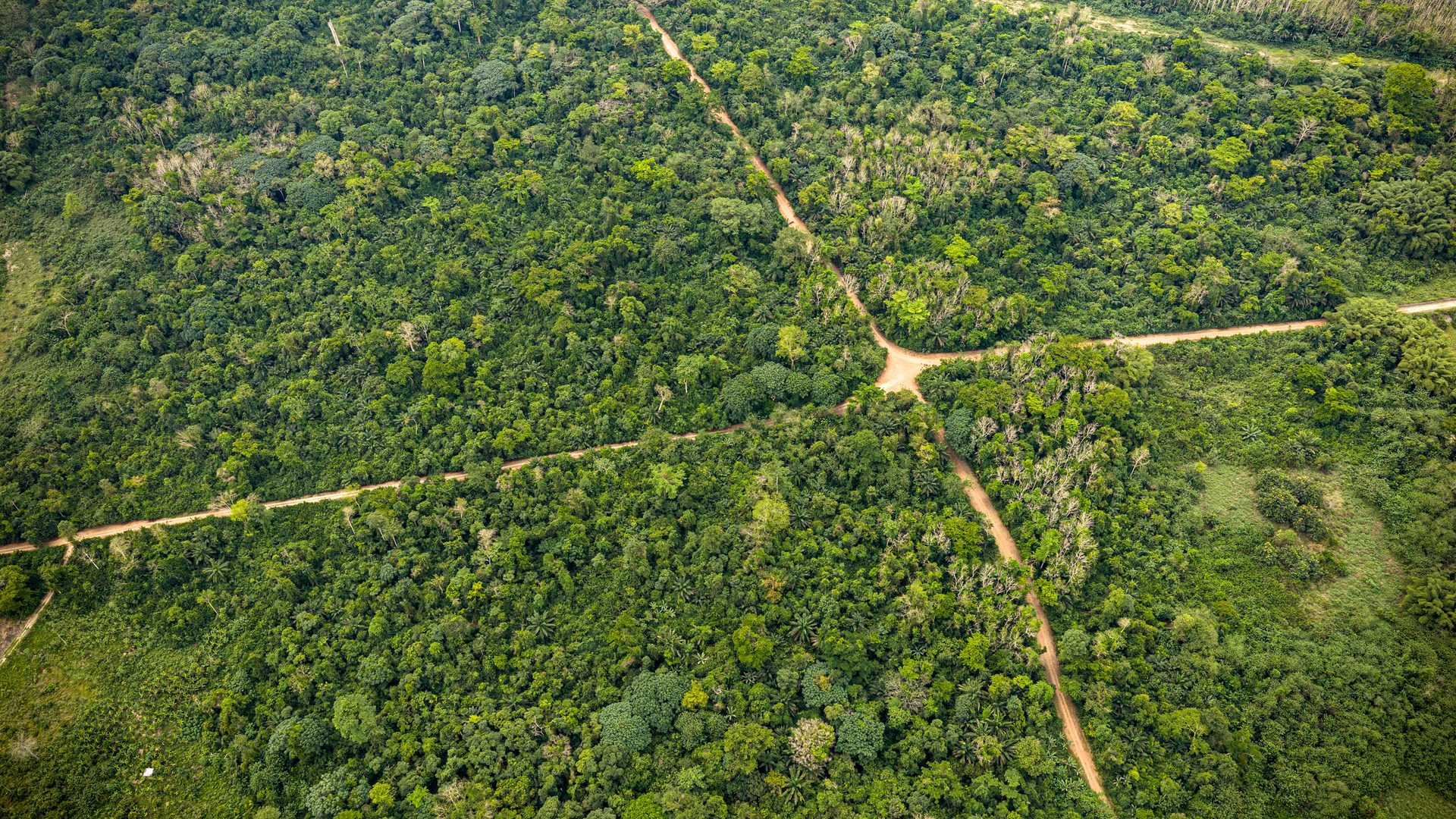
Under our Environmental Permit and MOU with the Government of Ghana, we are required to restore forest at three times our mining footprint — 303 hectares. We've exceeded this, establishing 317 hectares across two phases in partnership with the Forestry Commission of Ghana.
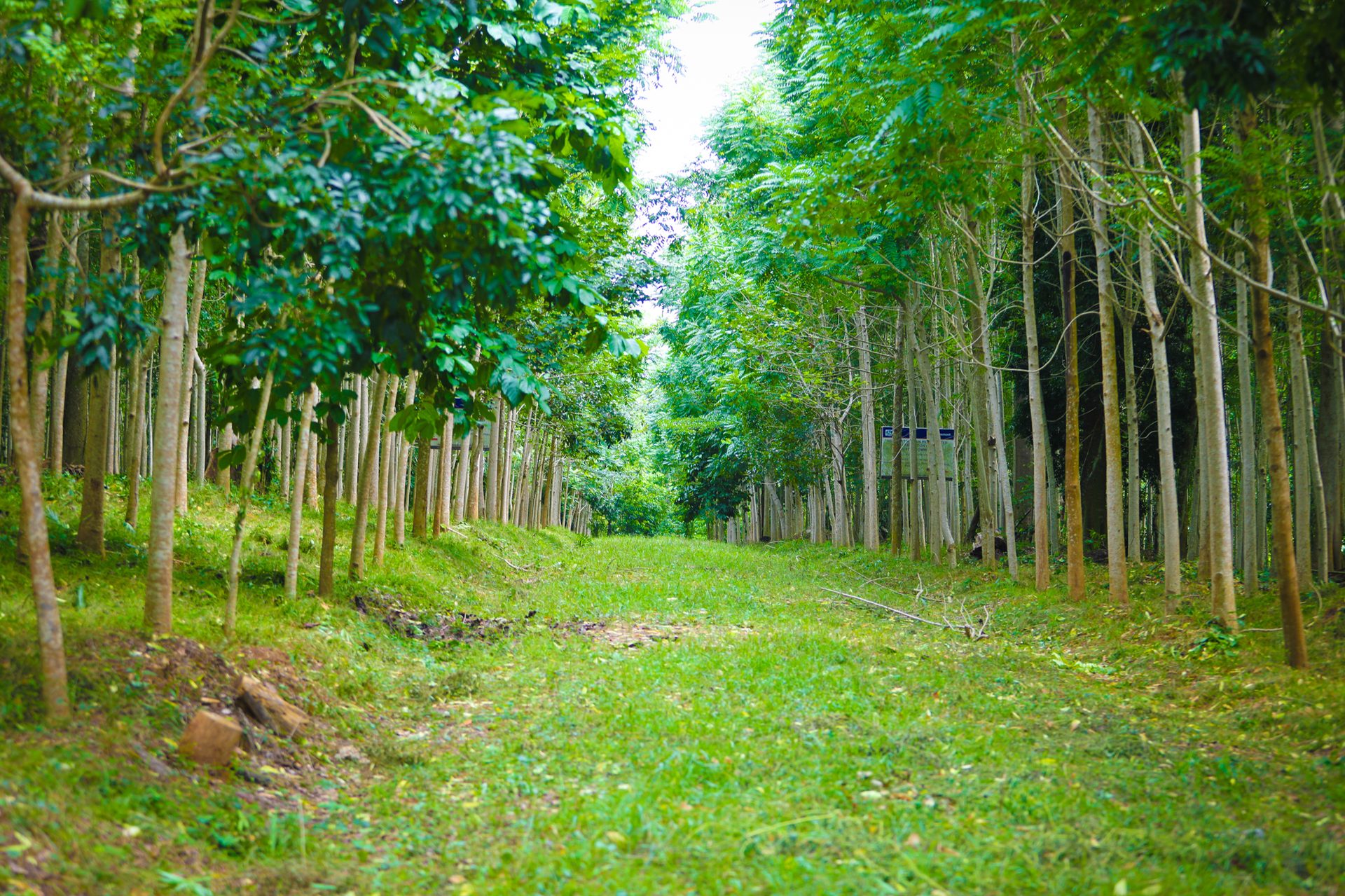
Phase 1 covers approximately 60 hectares adjacent to the tailings storage facility within the Ajenjua Bepo Forest Reserve. Phase 2 extends approximately 257 hectares into the Kweikaro Forest Reserve, beyond the immediate concession boundary. Both phases are due to be handed over to the Forestry Commission.
Annual wildlife monitoring recorded 12 previously unseen bird species in the Phase 1 plantation in 2025 — a measurable sign of ecosystem recovery.
| Phase | Location | Area |
|---|---|---|
| Phase 1 | Ajenjua Bepo Forest Reserve | ~60 ha |
| Phase 2 | Kweikaro Forest Reserve | ~257 ha |
| Total | Both reserves | 317 ha |
On-site biodiversity monitoring
We carry out systematic routine biodiversity monitoring within and around the mine boundary, reflecting our commitment to achieving no net loss of biodiversity — tracking wildlife population trends, the effects of hunting pressure, and the effectiveness of habitat mitigation measures.
Recent assessments at the Akyem Mine site identified five species of conservation concern, including one Critically Endangered and one Endangered species. Their confirmed presence highlights both the ecological importance of the area and the need for ongoing biodiversity management.
| Species | Common name | Status |
|---|---|---|
| Necrosyrtes monachus | Hooded Vulture | Critically Endangered |
| Phataginus tricuspis | White-bellied Pangolin | Endangered |
| Eidolon helvum | African Straw-coloured Fruit Bat | Near Threatened |
| Hipposideros jonesi | Jones' Roundleaf Bat | Near Threatened |
| Leptopelis occidentalis | Tai Forest Treefrog | Near Threatened |
Community Herbal Plant Farm
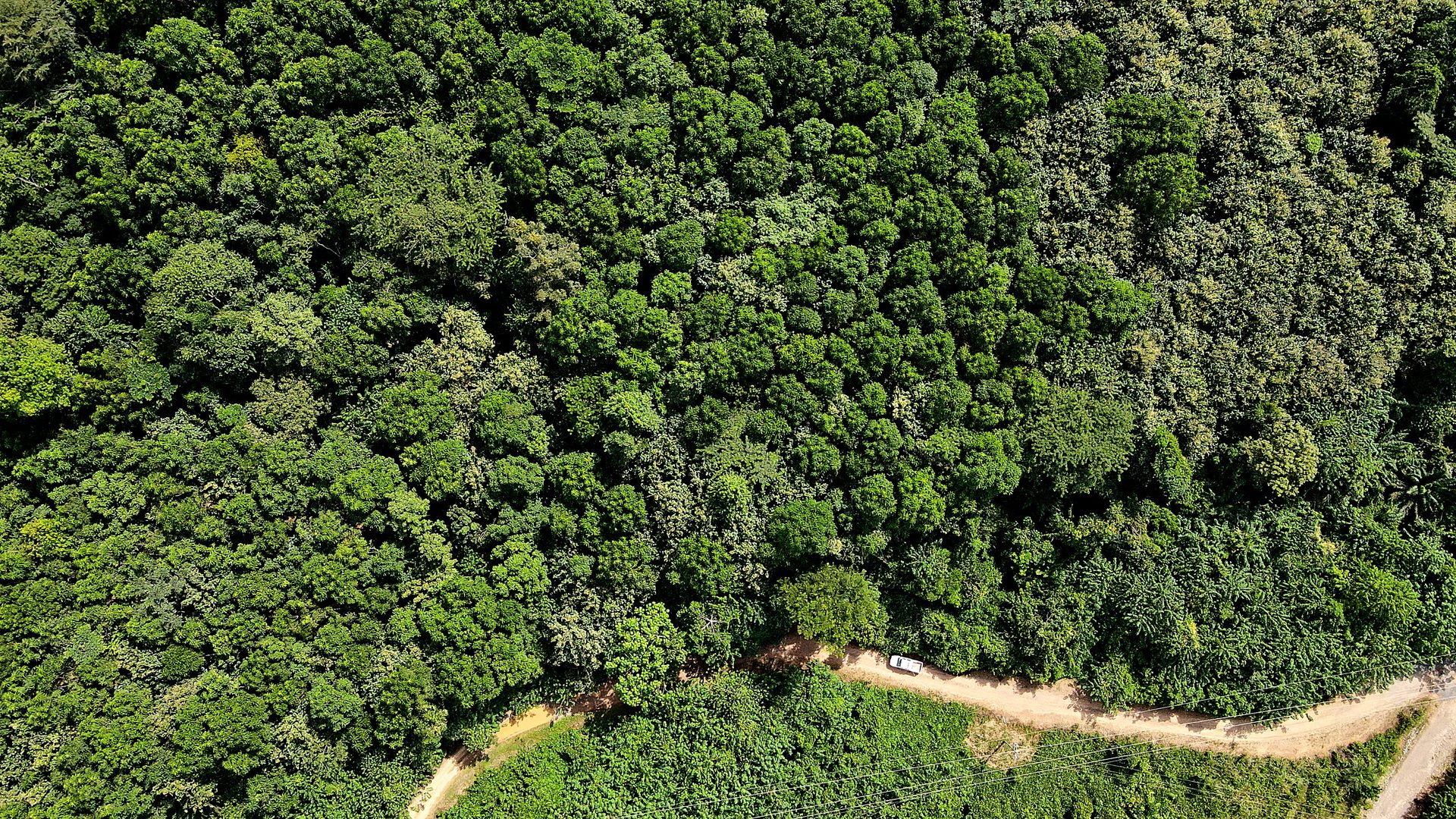
In collaboration with Conservation Alliance and the Resettlement community, we've established a 1.5-acre community herbal farm at Amanfrom, containing 54 plant species of medicinal and cultural significance — more botanically diverse than most areas within the mine concession. Species were selected in partnership with traditional herbal healers, and the farm doubles as wildlife habitat and a corridor connecting fragmented habitats.
Atewa Biodiversity Offset Project
The Atewa Biodiversity Offset is Ghana's first large-scale, science-based mining biodiversity offset — a commitment of at least ten years within the Atewa Range Forest Reserve, designated a Globally Significant Biodiversity Area (GSBA).
The programme compensates for residual and indirect ecological impacts that reforestation alone cannot address, designed to achieve measurable, independently verified No Net Loss and Net Gain outcomes for biodiversity. Under the most conservative management scenario, current projections exceed the 371 Quality Hectare (QH) target by 36 QH.
| Indicator | Detail |
|---|---|
| No Net Loss target | 371 Quality Hectares (QH) |
| Conservative scenario projection | 407 QH — 36 QH above target |
| Programme duration | 2025–2035 (minimum) |
| 2026 enrichment planting target | ~1,450 hectares |
| 10-year forest protection target | 8,260+ hectares of natural forest |
| International standards | IFC Performance Standard 6; BBOP Standards |
| Verification | Forestry Commission & RMSC — published annually |
Water, energy & waste management
Water management at the Akyem Gold Mine demonstrated strong performance across all key indicators in 2025, achieving an overall water recycling rate of 82.9% with zero regulatory exceedances for water quality. Total energy consumed was 1,077,823 GJ, sourced from grid electricity and diesel. Reducing emissions intensity remains a focus area as we progress our energy efficiency and electrification strategy. Solid waste recycled or reused reached 84.6% of the total generated, reflecting a strong commitment to the waste hierarchy. Tailings storage is managed in accordance with the Global Industry Standard on Tailings Management, and cyanide management complies with the International Cyanide Management Code (ICMC).
| Indicator | Unit | 2025 performance |
|---|---|---|
| Water recycling rate | % | 82.90% |
| Regulatory exceedances (water quality) | Number | Nil |
| Total GHG emissions (Scope 1 + 2) | tCO₂e | 93,970.75 |
| GHG emissions intensity | tCO₂e / oz Au | 0.4505 |
| Solid waste recycled or reused | % | 84.6% |
| Hazardous waste disposed | tonnes | 6.47 |
Regulatory compliance
Zijin Golden Ridge holds a full suite of Ghanaian statutory licences and permits required for gold mine operations, maintained continuously throughout 2025. The company paid GHS 1.41 billion (US$125.7 million) in corporate income tax — the largest single tax payment by a gold mining company in Ghana in 2025 at an effective rate of 32.5% — and met all mineral royalty, PAYE and local content submission obligations in full.
Beyond statutory compliance, the company holds membership of, and operates in accordance with, a range of international standards and industry frameworks that reflect its commitment to responsible mining at a global standard.
| Compliance indicator | Regulator | 2025 status |
|---|---|---|
| Mining licence | Minerals Commission | Valid |
| Environmental permit | EPA Ghana | Valid |
| Forest entry permit | Forestry Commission of Ghana | Valid |
| Biodiversity offset permit | EPA / Forestry Commission | Active — implementation commenced 2025 |
| Biodiversity offset MOU | Forestry Commission of Ghana | Signed 2018 — active |
| Mining licence renewal fee | Minerals Commission | GHS 304,700 (US$24,376) — paid |
| Corporate income tax | Ghana Revenue Authority | GHS 1.41 billion (US$125.7M) — paid |
| Local content submission | Minerals Commission | Submitted — 2025 |
| Regulatory violations / fines | All regulators | None reported |
Anti-corruption & ESG reporting
Zijin Golden Ridge operates a Code of Conduct and a formal Anti-Corruption Policy covering all employees, contractors, and business partners. Tax obligations are discharged at full statutory rates and publicly reported. Financial statements are independently verified by Ernst & Young (EY) Chartered Accountants.
The company published its first Sustainability Factbook in 2025 and submitted its annual Biodiversity Offset and ZADeF reports to the relevant oversight bodies. Progressive strengthening of independent ESG data assurance across all three pillars is targeted for the 2026 reporting cycle.
Financial statements independently verified by Ernst & Young (EY) Chartered Accountants — 2025.
| Indicator | 2025 performance |
|---|---|
| Code of Conduct in place | Yes |
| Anti-corruption policy in place | Yes |
| Sustainability Factbook published | Yes — 2025 |
| Biodiversity offset annual report | Submitted |
| ZADeF annual report | Published — presented at 10th AGM |
| Tax transparency | Full statutory rates — publicly reported |
| External financial auditor | Ernst & Young (EY) Chartered Accountants |
| Regulatory violations / fines | None |
Industry memberships & standards
Our operations are guided by and benchmarked against a suite of internationally recognised standards, and the company maintains active membership of the key bodies governing responsible gold mining globally.
| Membership / standard | Status & scope |
|---|---|
| International Cyanide Management Code (ICMC) | Responsible cyanide use in gold processing — compliance confirmed 2025 |
| International Council on Mining and Metals (ICMM) | 10 Principles for Sustainable Development in Mining — guiding framework |
| World Gold Council | Responsible Gold Mining Principles — industry best practice alignment |
| Global Industry Standard on Tailings Management (GISTM) | Applied to 8,908,112.9 tonnes in tailings storage — 2025 |
| IFC Performance Standard 6 (Biodiversity) | Governing framework for Atewa Biodiversity Offset |
| BBOP Standards on Biodiversity Offsets | Applied to Atewa programme design and verification |
| GRI Standards (Global Reporting Initiative) | Guiding framework for Sustainability Factbook disclosure |
| Ghana Chamber of Mines | National industry membership and governance engagement |

Investing in our host communities
The Zijin Akyem Development Foundation (ZADeF) channels structured, accountable investment across ten host communities in the Birim North District — Afosu, Adausena, Ntronang, Adjenua, Old Abirem, New Abirem, Mamanso, Yayaaso, Yaw Tano and Hamlets, and Hweakwae.
Zijin Akyem Development Foundation (ZADeF)
Established in June 2014 under a formal Foundation Agreement, ZADeF is funded through US$1 per ounce of gold sold quarterly, plus 1% of pre-tax profit annually. Each of the ten host communities has a seven-member Sustainable Development Committee that identifies, plans and manages local projects, with a competitive tender process overseen by an eleven-member Tender Board to ensure value for money.
Education
Education is ZADeF's most extensive and longest-running thematic area. Since inception in 2014 through December 2025, the Foundation has provided scholarships to 6,980 students from the ten host communities — at senior high school level, the Akyem Vocational Technical Institute (AVTI), remedial programmes, tertiary institutions, and through the ZADeF/Liebherr Excellence Award partnership. In the 2024/2025 academic year alone, 966 students received scholarships — 400 male and 566 female.
Economic empowerment
The A-SEED programme (Akyem Skills, Entrepreneurship and Enterprise Development) targets employable skills for 600 youth across the Akyem communities. Its credit union, the Pempamsie Cooperative Credit Union (PCCU), served 4,691 customers with formal financial access. 51 heavy duty machinery operators graduated with Minerals Commission licences, creating a pipeline of skilled workers for the mine's supply chain.
Health, water & sanitation
In April 2025, ZADeF completed and handed over the Paediatric Ward at New Abirem Government Hospital — one of the most visible and impactful infrastructure projects in the Foundation's history. Beyond infrastructure, ZADeF provides monthly stipends to five local nurses at the Adausena Hweakwae Amanfrom Clinic, and extended a GHS 1,000,000 (US$80,000) interest-free loan to fund a 280m³ reinforced concrete water tank at Mamanso, improving water supply for four communities.
Agriculture & cultural heritage
Oil palm plantations are operational or underway at Amanfrom/Resettlement (43.5 acres, monthly harvesting ongoing), Hweakwae (50 acres acquired), and Adausena (land acquisition initiated). Cultural heritage support was provided to six communities in 2025, including the Akyem Kotoku Paramountcy, mausoleum construction at Hweakwae, and sponsorship of youth sports including the Owiredu Cup Competition.
Health & safety
Safety is a primary and non-negotiable operational commitment. In 2025 we recorded zero fatalities across 4,265,388 total hours worked, supported by a targeted programme of ageing equipment replacement and a wellbeing programme spanning nutrition, physical activity, general health and mental health across all four quarters.
Zero fatalities · 4,265,388 hours worked · 2025
Local content & employment
Of our 1,235-person workforce, 597 individuals — nearly half — came from the ten host communities surrounding the mine, reflecting a deliberate hiring strategy. In 2025, we spent GHS 4.19 billion (US$335.3 million) with Ghanaian businesses and state enterprises — local procurement that exceeded our direct fiscal contribution to government by nearly two to one.